Mountain bikes come in several flavors. Broadly, trail/all-mountain MTBs are versatile “do-it-all” bikes, cross-country (XC) bikes are race‑oriented for speed and climbing, hardtails have only front suspension, and full-suspension bikes have both front and rear shocks. Each type is optimized for different terrain, riding style, and budget. Below we define each type, compare their performance, and list pros/cons and price ranges to help you choose.
Trail/All-Mountain Bikes (MTB)

Trail (all-mountain) bikes are the ultimate all-rounders, built to handle almost anything on the trail. They usually have moderate suspension travel (around 130–160 mm front and rear) and balanced geometry. This makes them versatile: they climb reasonably well and are comfortable on descents. In other words, they strike a balance between climbing efficiency and descending capability. You’ll see them on mixed trails, moderate downhill sections, jumps, and general trail centers.
- Terrain/Riding: Good for varied terrain (singletrack, rolling hills, trail center features). Trail bikes can take on steeper trails and bigger obstacles than XC bikes, but are not as heavy-duty as enduro or downhill bikes.
- Weight/Handling: Medium weight. (Most trail bikes are full-suspension, so heavier than a similarly sized hardtail.) They handle stably on rough ground but aren’t as quick on flats as an XC bike.
- Price Range: Trail bikes span a wide range. Entry-level aluminum models start around $1,200–1,500, mid-range carbon or high-end alloy bikes are $3,000–5,000, and top-end carbon models can reach $6,000+. (Direct-to-consumer brands like Canyon, YT, Ari often pack more features for the money.)
Pros: Very versatile on mixed trails. Full suspension so very capable on descents. Great if you want one bike to do it all.
Cons: Heavier and pricier than XC or simple hardtails. Less efficient on long climbs than a dedicated XC bike.
Cross-Country (XC) Bikes
XC bikes are lightweight, race-oriented mountain bikes designed for maximum pedaling efficiency. They typically have shorter suspension travel (about 100–120 mm) and aggressive geometry. XC bikes excel at climbing and covering long distances quickly. In practice, they feel snappy and responsive: shorter wheelbases and steeper head angles make them turn easily.
- Terrain/Riding: Best on hard-packed singletrack, gravel roads, and smooth climbs. Ideal for cross-country races, marathon rides, and general fitness riding. They can handle some rocks and roots, but are not meant for very rough downhill sections. If your trails are mostly rolling hills or fire roads, an XC bike will feel faster.
- Suspension: Often minimal. Many XC bikes are hardtails (front suspension only) or have very short rear shocks. Full-suspension XC models exist with ~100–120 mm travel, but even these emphasize light weight.
- Weight/Handling: XC bikes are the lightest mountain bikes. A well-built XC hardtail can weigh under 11 kg (24 lbs). This light weight and steep geometry make them superb climbers.
- Price Range: Entry-level XC hardtails start around $1,000, mid-range XC bikes (often carbon) are ~$2,500–4,000, and high-end race rigs with top components can exceed $5,000.
Pros: Extremely efficient climbers and accelerators, very light. Great for endurance or racing.
Cons: Ride is firm – they can feel harsh on rough ground. Not ideal for steep or technical descents, and often lack plushness or stability off-road.
Hardtail Bikes

A hardtail mountain bike has only front suspension and a rigid rear. In other words, no rear shock. This simple design makes hardtails lighter and less expensive than full-suspension bikes of similar quality.
- Terrain/Riding: Best suited to smooth trails, cross-country, and general riding where big drops or rough terrain are minimal. Hardtails are popular for beginner trails, gravel roads, and bikepacking. (They also see use in XC racing and trail riding.) Riders must pick clean lines over roots and rocks.
- Suspension: Front fork only (typically 80–120 mm travel).
- Weight/Handling: Hardtails are light (~1 kg lighter) than comparable full-susp bikes. They ride efficiently uphill with no rear bob. They do bounce more over rough spots and require good body positioning, but many riders enjoy the simplicity.
- Price Range: Hardtails are the most budget-friendly mountain bikes. Entry-level hardtails start around $600–800. A good beginner hardtail is often in the $1,000–1,500 range. Mid-range hardtails ($1,500–2,500) add better suspension and components, and top-end models (some carbon frames) can go past $3,000.
Pros: Simple and cheap. Easier maintenance (no rear shock). Lightweight and climb very efficiently. Hardtails are great for learning skills on gentler trails.
Cons: No rear shock means a rougher ride – you’ll feel more bumps and vibration. Less traction and control on very rough or steep terrain. Generally not ideal if most of your riding is technical downhill.
Example: An entry-level Canyon Grand Canyon hardtail bike. Hardtails have only a front fork suspension (no rear shock), making them about 1 kg lighter than similar full-suspension bikes and more affordable.
Full-Suspension Bikes
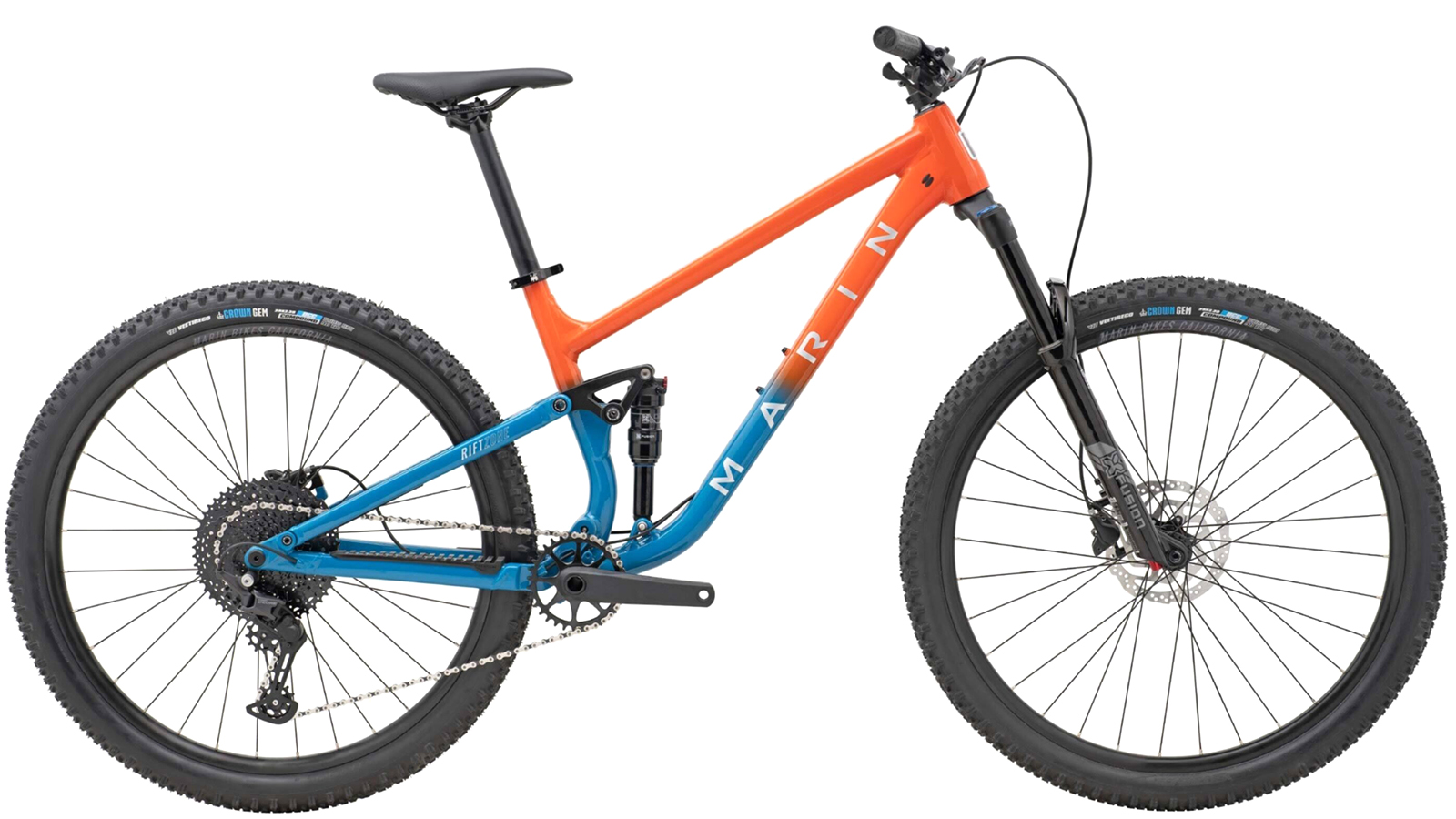
Full-suspension bikes have both front forks and a rear shock. The rear suspension allows the rear wheel to move independently, which smooths out bumps and improves traction. Modern full-suspension trail bikes usually have 100–160 mm of travel, depending on whether they’re XC, trail, or enduro models.
- Terrain/Riding: Built for rough, technical trails. If you plan to hit rocky paths, rooty climbs, or steep descents, full-suspension is almost a necessity. They shine in downhill sections, jumps, and any scenario where comfort and control matter.
- Suspension: Front and rear shocks (typically 100–160 mm travel each). Many trail bikes have ~130–160 mm, while XC-focused full-susp models use ~100–120 mm.
- Weight/Handling: Full-suspension bikes are heaviest due to the extra shock and linkage. They’re slower uphill compared to a similar hardtail or XC bike, but offer far more grip and comfort on the way down.
- Price Range: Generally more expensive. Entry-level full-suspension bikes start around $1,500, often on aluminum frames. Expect $3,000–5,000 for a midrange carbon model. High-end builds with top-tier suspension and carbon frames can go $6,000+. Full-susp bikes simply cost more to design and build.
Pros: Smoothest ride of all MTB types. Full-suspension bikes provide extra comfort and control on rough terrain. Great for long downhill runs and technical features.
Cons: Cost – a full-suspension frame and shock add price. Heavier weight, which can slow climbing. More complexity means you’ll pay more for service: the rear shock needs regular servicing and maintenance.
Example: Riding a full-suspension trail bike on a rocky forest trail. Full-suspension bikes (with front and rear shocks) “absorb” bumps and offer more control and comfort on rough terrain.
Price Ranges & Buying Tips
- Hardtails: ~$600–800 entry (basic alloy frame), ~$1,000–1,500 for well-equipped beginner hardtails, and $2,000+ for high-end frames.
- XC Bikes: Similar to hardtails at the low end. A decent XC hardtail or light FS starts ~$1,000. Midrange XC (often carbon) runs ~$2,000–3,000. Race-grade XC bikes can be $4,000–6,000 or more.
- Full-Suspension/Trail: Entry-level FS starts around $1,500 (aluminum frames). Midrange carbon trail bikes are ~$3,000–5,000. Top-tier models easily exceed $6,000.
- Value Tip: Direct-to-consumer brands (Canyon, YT, Ari, etc.) often offer very strong component specs for the price. If budget is tight, a hardtail may let you buy new instead of used.
Pros & Cons Summary
- Trail/All-Mountain: Pros: Versatile on varied trails; comfortable descending; can “do it all.” Cons: Heavier and pricier; not the fastest climber.
- Cross-Country (XC): Pros: Extremely efficient climbers and sprinters; very light and agile. Cons: Harsh ride on rough trails; sacrifices stability for speed.
- Hardtail: Pros: Affordable and simple; lightest and best for smooth climbs; low maintenance. Cons: Can be punishing on rough ground; less traction and comfort on technical terrain.
- Full-Suspension: Pros: Ultimate comfort and control on rough trails; better traction and confidence downhill. Cons: Highest cost; heavier and requires more maintenance (rear shock servicing).
Comparison Table
| Type | Suspension (travel) | Terrain / Riding Style | Weight | Price Range (Entry/Mid/High) |
|---|---|---|---|---|
| Trail/All-Mountain | Full-susp ~130–160 mm (some hardtails ~120 mm) | Mixed trails, jumps, moderate descents | Medium | ~$1.5k / $3k / $6k+ |
| Cross-Country (XC) | Full-susp ~100–120 mm (or hardtail) | Fast climbs, rolling singletrack, racing | Lightest | ~$1k / $2.5k / $5k+ |
| Hardtail (MTB) | Front fork only (~80–120 mm) | Smooth XC trails and climbs | Light (~1 kg less than FS) | ~$600 / $1.5k / $3k+ |
| Full-Suspension MTB | Front + rear (~100–160 mm) | Technical/rough trails, downhill, jumps | Heaviest | ~$1.5k / $4k / $8k+ |
Each rider’s needs differ, but by comparing these categories you can match a bike to your style and budget. For example, if you mostly climb and stay on smooth trails, an XC hardtail in the $1–2k range can be perfect. If you hit rocky, technical trails, a $3–5k full-suspension trail bike offers better comfort and control. Understanding these differences helps you shop smarter (and choose the right affiliate-recommended bike for you).